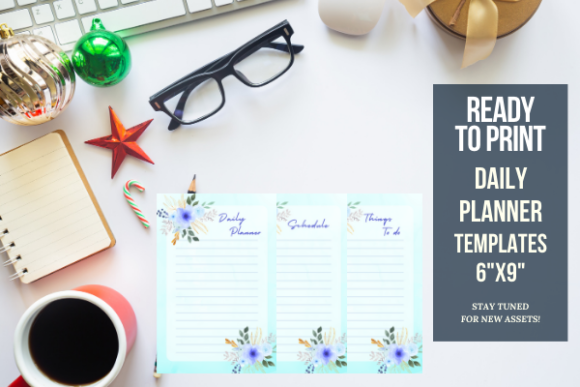
Reviewing Printable Planner Templates for Real Embroidery Projects
As a designer who spends more time staring at stitch simulations than most people care to admit, I approach every new Printable Planner Templates file with a mix of curiosity and skepticism. We live in an era where digital assets are abundant, but finding a design that translates well from a screen to actual thread on fabric is a different beast entirely. When I first opened this specific set of templates, my immediate thought wasn't about how they would look on a website mockup, but how they would hold up under the needle of a commercial embroidery machine.
The visual personality of Printable Planner Templates leans heavily into organization and structure, which makes sense given the category. However, in the world of machine embroidery design, structure can be a double-edged sword. Clean lines are beautiful until they become too dense for the fabric to handle. My first impression was that these designs possess a modern, minimalist aesthetic that fits perfectly with current trends in boutique branding and handmade products. The layout feels intentional, avoiding the cluttered look that often plagues generic digital downloads.
Putting the Design to the Test: A Real-World Scenario
To truly evaluate any embroidery file, you have to move beyond the preview image. I decided to test these templates on a project that has been gaining traction in my small shop: custom embroidered tote bags for local creatives. The goal was to create a personalized gift that doubled as a functional piece of custom apparel or accessory. I selected a heavy-weight canvas tote, knowing that the texture would provide a good challenge for the stitch definition.
Working with Printable Planner Templates on this medium revealed some interesting characteristics. The design elements, which likely rely on a combination of running stitch for outlines and fill stitch for larger blocks, needed careful attention to stitch density. On the canvas, the fill areas sat nicely without causing puckering, provided I used the correct stabilizer. This is where many designers fail; they treat a digital file as universal, but a design meant for paper often needs adjustment when translated to thread. For this specific application, the templates worked surprisingly well as a base for a sweatshirt embroidery project I had lined up for a client's holiday collection.
Navigating Fabric Challenges and Hoop Limitations
One of the critical aspects of using Printable Planner Templates in a professional setting is understanding where they might struggle. While they shine on flat, stable surfaces like tote bags or pillow covers, caution is required when moving to trickier materials. If you are planning to use these on stretchy fabrics like jersey knits for baby embroidery projects, you must be vigilant about stabilization. The structural nature of planner graphics means there are often straight lines and sharp corners; on a stretchy fabric, these can easily distort if the hoop size isn't managed correctly or if the fabric isn't pulled taut enough.
Furthermore, consider the scale. Many of these templates feature detailed layouts that mimic actual planner pages. When scaled down for a cap or a small embroidered patch, tiny lettering or intricate grid lines can merge together. I strongly advise running a test stitch-out on scrap fabric before committing to a final product. Check how the thread colors contrast against your chosen background. A design that looks crisp on a white digital background might disappear entirely on a dark navy sweatshirt if the thread weight isn't adjusted or if the color contrast isn't high enough.
Commercial Viability and Brand Consistency
For Etsy sellers and creative entrepreneurs, the value of a design asset lies not just in its beauty, but in its ability to enhance brand consistency. Printable Planner Templates offer a unique opportunity to bridge the gap between digital planning and physical goods. Imagine offering a "planner addict" bundle that includes both the digital PDF and a matching embroidered pouch or journal cover. This kind of cross-medium branding builds trust and increases the perceived value of your handmade product.
However, before listing these as part of your craft business inventory, you must verify the licensing terms. Just because a file is labeled as a template doesn't automatically grant commercial rights for physical goods. Always confirm whether the license allows for selling finished items like tea towels, aprons, or holiday gifts. Assuming you have the green light, these designs can elevate a standard item into a boutique-quality piece. The clean lines suggest professionalism, which is crucial when you are trying to attract buyers who appreciate high-end design assets.
Final Thoughts on Stitching and Presentation
In terms of the finished look, Printable Planner Templates deliver a sophisticated vibe that appeals to organized, detail-oriented customers. Whether you are creating nursery decor with name charts or wedding gifts featuring timelines, the aesthetic holds up. The key to success lies in the execution. Do not skip the step of testing on different fabric textures. A satin finish silk will react differently to the same digital embroidery file than a rough linen.
My recommendation for fellow designers is to treat these templates as a starting point rather than a final solution. Experiment with applique design techniques by using the outlines as a guide for fabric placement, or mix satin stitch borders with fill centers to add dimension. By taking the time to understand how Printable Planner Templates interact with real-world variables like thread tension, fabric weave, and hoop constraints, you can transform a simple download into a standout finished product that customers will cherish.
Ultimately, the true test of any design is customer reaction. In my experience, items that blend functionality with personalization—like a planner-themed embroidered accessory—tend to generate higher engagement. They tell a story about the user's lifestyle. As long as you approach Printable Planner Templates with a practical mindset, checking those small details and respecting the limitations of your machinery, they can be a powerful addition to your repertoire of commercial embroidery projects.